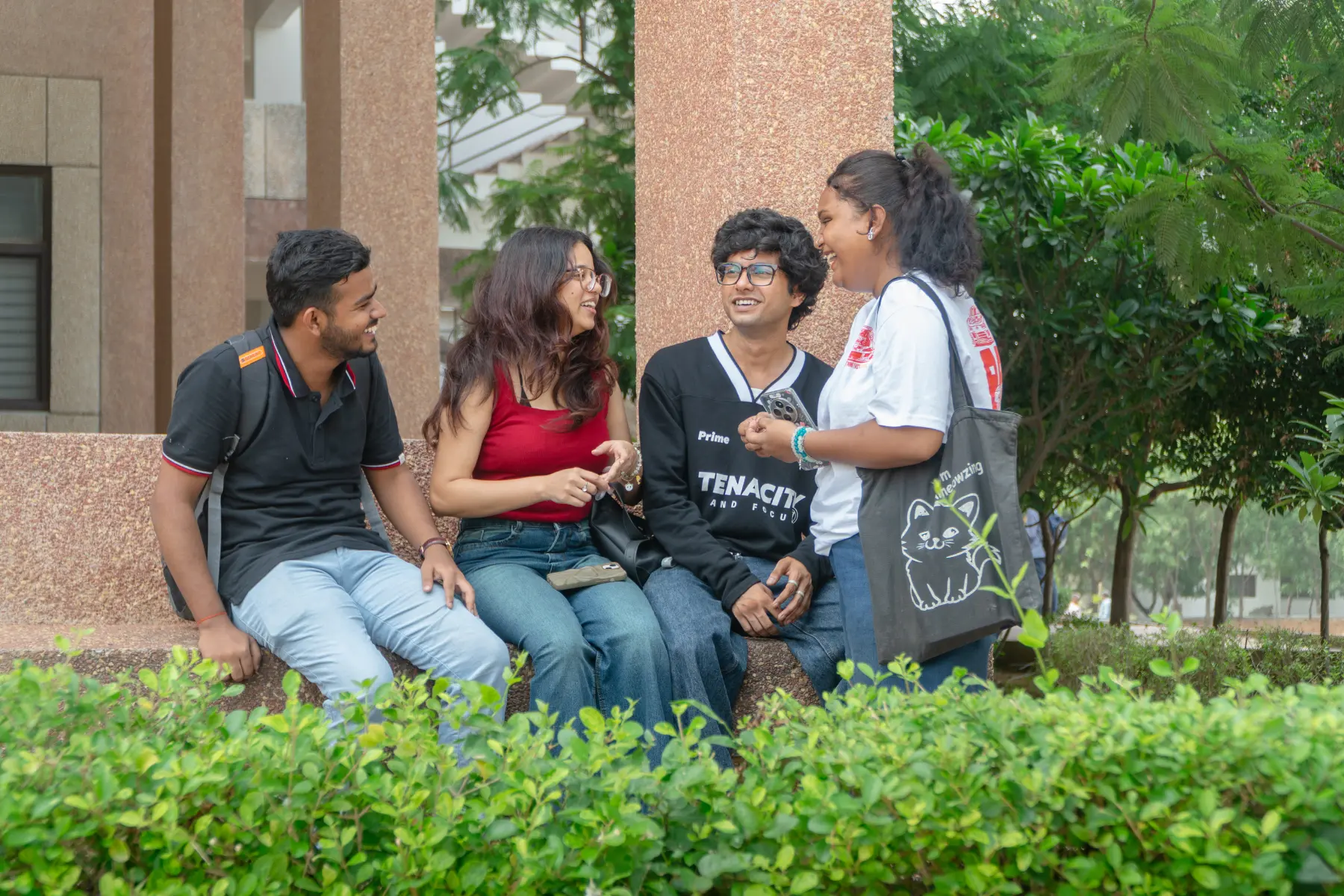

When I first joined the BBA program at Vivekananda Global University, Jaipur, I thought I was enrolling in a business degree. Looking back now as an alumnus, I can say with complete honesty that what I really entered was an ecosystem — one that constantly pushed me to think wider, speak better, take initiative, work with diverse people, and see business not only as a subject, but as a living, changing world.
That is the easiest way to describe VGU to someone who has never experienced it. It never felt like a place where learning stayed inside the classroom. The university presents the BBA as a program built around critical thinking, business case studies, hands-on activities, entrepreneurship, and multidisciplinary research, and that is exactly why the experience feels more alive than a routine lecture-driven degree.
The first few months changed my idea of a BBA
In the beginning, I expected the usual things most students imagine from a BBA — management theory, marketing basics, accounting classes, presentations, internal assessments, and exams. Those were certainly there, but what surprised me was the way the course structure started opening into something much bigger, with subjects such as Fundamentals of Management, Business Law, Entrepreneurship Development, Managerial Economics, Organizational Behavior, Business Analytics, Business Research Methods, Operations Research, ERP, Project Management, and a final graduation project.
That mix matters. It means the degree does not keep students trapped in one narrow lane. Instead, it slowly builds managerial thinking from multiple angles — people, markets, systems, numbers, decisions, strategy, technology, and execution.
As a student, I could feel that progression semester after semester. One phase sharpened the basics, another expanded analytical ability, and then gradually the program started feeling less like a textbook degree and more like professional preparation.
What made the classroom different: cases, discussions, and applied learning
One of the biggest reasons I remember the BBA at VGU so strongly is the way business problems were not always taught as dry theory. VGU explicitly states that the program develops critical thinking through business case studies and hands-on activities, and that approach changes the quality of the classroom experience.
A case-study-driven class feels different from a memory-based one. Instead of simply writing definitions, students are pushed to discuss why a company failed, how a leader handled a crisis, what went wrong in a market-entry strategy, how a branding decision changed consumer behavior, or why one business model scaled while another collapsed.
That style becomes even more meaningful because VGU’s wider academic ecosystem includes which the university lists among its integrated learning and certification partners along with Coursera and LinkedIn Learning.
For me, and for many classmates, that meant the BBA never felt frozen in old notes. It felt connected to the real language of business — decisions, uncertainty, trade-offs, outcomes, leadership, and strategy.
The day I realized learning at VGU was not limited to one source
There is a moment in college when a student realizes whether the university truly invests in growth or only talks about it. At VGU, that realization came when I saw how seriously the institution had built access to external learning platforms and industry-oriented resources. The university’s industry-connect framework lists Coursera, LinkedIn Learning, EXIN, Red Hat, and Code.edu as part of its ecosystem.
Public university-linked communication also describes investment in personalized education through global platforms such as Coursera, LinkedIn Learning, NPTEL, and SWAYAM, giving students access to thousands of additional learning pathways.
This mattered a lot to me because classroom teaching is important, but it is never enough for ambitious students. A BBA student may want extra depth in digital marketing, analytics, leadership, communication, people management, entrepreneurship, or finance, and these external certifications help turn a degree into a much richer profile.
Simulation, analytics, and the feeling of learning by doing
What I appreciated about the BBA curriculum was that it did not remain stuck in only descriptive subjects. The program includes Business Analytics, Statistics for Business Decision, Operations Research, ERP, System Analysis and Design, and Project Management, which naturally create room for software-enabled, decision-based, and simulation-oriented learning.
This is where management education starts becoming practical. When a student works through systems, data, process logic, enterprise tools, or business scenarios, learning becomes active. It stops being about what a concept means and starts becoming about what a manager would actually do.
VGU’s is relevant here as well because university-linked communication highlights access to case studies, simulations, and business-learning tools from the platform.
From an alumni perspective, this is one of the strongest parts of the experience. It trains the mind to choose, judge, interpret, and respond rather than just repeat.
The startup culture was not decorative — it was visible and real
One thing that gave the VGU BBA a distinctive energy was the seriousness of its startup ecosystem. ACIC-VGU Foundation describes itself as India’s first Atal Community Innovation Centre in a private university under the Atal Innovation Mission, NITI Aayog, and reports 140+ startups incubated, 15,000+ aspiring entrepreneurs impacted, 60+ partnerships, 50+ mentors, and 200+ events.
The university’s incubation page goes further and says that through ACIC-VGU Foundation and VGU-TBI, the ecosystem has incubated 160+ startups, enabled more than ₹100 crore in revenue generation, and supported 800+ jobs, along with co-working spaces, prototyping labs, design and fabrication studios, and multiple funding pathways.
For a BBA student, this changes everything. Entrepreneurship stops being a chapter in a book and starts becoming a visible culture around you. You begin meeting founders, attending startup events, hearing funding conversations, seeing ideas take shape, and understanding that business is not only something to study — it is something to build.
I always felt that management students had a special place in this environment. We were often the people who could connect creativity with structure — market research with product ideas, branding with business models, pitch logic with customer understanding, and operations with commercial viability.
The transdisciplinary culture made me feel future-ready
One of the smartest things VGU appears to be doing is pushing students beyond disciplinary silos. Recent university-linked material highlights a transdisciplinary project model where students from B.Tech, MBA, BBA, AI, data science, design, and other domains collaborate on shared work.
As an alumnus, I believe this matters more than students realize during the degree itself. Modern work is rarely isolated. Businesses need people who can speak across functions, coordinate with technical teams, understand design thinking, appreciate data, and still hold together the logic of customers, markets, operations, and value creation.
That is exactly why transdisciplinary work feels so powerful for a BBA student. It creates a different kind of confidence — the confidence to enter a room full of people from different backgrounds and still contribute meaningfully.
Freedom beyond the major: minors, flexibility, and the shape of a better profile
One thing I genuinely admire about VGU is that it does not force students into a rigid one-track academic identity. The university promotes a “Design Your Own Degree” approach and offers minors across multiple areas, including Design, Sports, Sustainable Development, Indian Knowledge Systems, Performing Arts, Environmental Science, Economics, Social and Community Engagement, Entrepreneurship, and Psychology.
For a BBA student, this is powerful. It means the degree can become more personal and more strategic. A student interested in branding and consumer behavior can take Design, someone who wants stronger market understanding can choose Economics, someone building confidence and stage presence may benefit from Performing Arts, and someone drawn to leadership and competitive culture may connect with Sports.
This flexibility also aligns well with the broader AEC, VAC, and SEC-style curricular mindset encouraged under the NEP era, where a student’s education is meant to become more layered, more skill-based, and more interdisciplinary.
Internships, rigor, and learning that demanded seriousness
What made the BBA feel credible, not just attractive, was the mix of opportunity and academic seriousness. The official BBA framing speaks of internships, practical exposure, research orientation, and industry engagement, and student testimonials on the program page connect the experience directly with real-time exposure and career development.
At the curriculum level, the presence of Business Research Methods, Operations Research, ERP, analytics-oriented papers, project work, and the final graduation project adds a layer of academic rigor that many students only fully appreciate later.
That rigor matters because management education can sometimes become too superficial if it focuses only on presentations and personality. At VGU, the structure suggests that students are expected not just to speak well, but to think carefully, analyze properly, and work through business questions with more discipline.
The university also states that it is anchored in rigorous academic research and highlights faculty contributions to advanced research and high-impact publications, which helps create a more serious academic environment around the student experience.
The crowd and peer networking shaped me as much as the curriculum
When people ask what makes a college worth remembering, I often say that the crowd matters almost as much as the course. VGU states that it has a community of over 10,000 students from nearly every Indian state and union territory and more than 30 countries, which indicates a broad and diverse student ecosystem.
That kind of diversity improves the BBA experience in quiet but important ways. Group discussions become sharper, class debates become more interesting, projects become more dynamic, and one’s sense of ambition expands because classmates bring different languages, ideas, habits, and aspirations into the same space.
Peer networking is one of the hidden strengths of a good business school environment. Some classmates later become startup collaborators, some become corporate contacts, some become referral sources, and some simply become the people who teach you how to think bigger.
Placements gave students belief that effort could convert into outcomes
Placement stories always need honest handling because university-wide numbers and program-specific outcomes are not identical. Still, public placement coverage for VGU reports an average salary of ₹6.7 LPA in 2025, along with 1,000+ participating companies, 5,000+ offers, 3,500+ students placed, and 7,000+ internships.
As an alumnus, I would frame this carefully: the strength of VGU is that it appears to provide a large opportunity platform. Students still need to earn outcomes through skill, communication, internships, discipline, and visibility, but the ecosystem itself gives enough scale for serious aspirations.
That is why the “around 6 lakh average” idea circulates so much in conversations. It fits broadly with public university-level placement reporting, even though students should avoid treating it as a guaranteed or officially published BBA-only figure.
Reputation matters, and VGU has built visible credibility
As students, we often care first about campus life and placements, but after graduation, institutional credibility matters even more. VGU’s official pages state that the university is NAAC A+ accredited and placed in the QS World University Rankings – Asia 2026 rank 666th and 95th in India
The university is also presented publicly as an AACSB member institution, and it appears in various magazine and ranking-oriented media discussions. Formal accreditations and globally benchmarked rankings deserve the most weight, but together these signals do strengthen how the university is perceived in the local and regional education market.
Affordable enough to feel like value, not just aspiration
Another reason I believe VGU’s BBA stands out in Jaipur is that the fee remains relatively accessible compared with the scale of what students are offered. Public course listings place the total BBA fee around ₹3.08 lakh, , suggesting that the program has remained within a range many families can still evaluate as practical value.
And value is the right word here. When a student is not only getting a degree but also exposure to case studies, certifications, startup culture, transdisciplinary collaboration, minors, internships, clubs, and a large campus environment, the discussion shifts from “What is the fee?” to “What is the return on the experience?”.
Campus life is where the degree becomes a memory
The most human part of my memory of a business school is not a timetable. It is the campus atmosphere — the rush before events, the discussions after classes, the club meetings, the fests, the rehearsals, the networking moments, the cultural buzz, and the sense that something is always happening around you.
VGU’s BBA page points to diverse club engagement, cultural participation, and broad student activities, while the university’s wider campus and incubation ecosystem reinforces the image of a vibrant and active student life
This is where events such as Panache-style cultural visibility, club culture, celebrity appearances, and flagship campus activities matter. They are not just entertainment. They become the places where students learn confidence, teamwork, leadership, communication, and presence — qualities that are deeply valuable in business careers.
Why I still describe it as one of the strongest local BBA ecosystems
If someone asked me today, as an alumnus, what makes the VGU Jaipur BBA special, I would not answer with one feature. I would talk about the combination: case-study learning, industry-linked certifications, startup exposure, transdisciplinary projects, flexible minors, practical internships, research orientation, peer quality, and a campus that feels energetic rather than passive.
That combination is exactly why the program feels strong in Jaipur’s local ecosystem. It offers more than subject coverage. It offers a platform where a student can test ideas, build confidence, expand identity, and grow into someone more capable than the person who first walked onto campus.
No college can create success automatically, and VGU is no exception. Students still have to be hungry, disciplined, and proactive. But for someone who wants an ambitious, affordable, future-facing BBA in Jaipur — one with visible energy, serious opportunity, and the feeling that every week brings something new — VGU makes a compelling case.
And that is probably the most honest alumni line I can offer: I joined for a degree in management, but I left with a much bigger education in ambition, collaboration, expression, and possibility.
1. Is BBA at VGU Jaipur good for career growth?
Yes, the BBA program at VGU Jaipur focuses on practical learning, case studies, internships, and industry certifications, helping students build real-world business skills and career readiness.
2. What makes VGU’s BBA different from other colleges?
VGU stands out due to its startup ecosystem, industry-linked certifications (like Coursera & LinkedIn Learning), transdisciplinary projects, and flexible minor options that enhance overall student development.
3. Does VGU provide placement opportunities for BBA students?
Yes, VGU offers strong placement support with 1000+ companies, internships, and skill-based training. However, final placement depends on the student’s performance, skills, and consistency.
4. What is the fee structure for BBA at VGU Jaipur?
The approximate total fee for the BBA program at VGU is around ₹3.08 lakh, making it a value-for-money option considering the exposure and opportunities provided.
5. Are internships included in the BBA program at VGU?
Yes, internships are an important part of the curriculum, helping students gain hands-on experience and industry exposure during their degree.
6. Does VGU support entrepreneurship for BBA students?
Absolutely. Through ACIC-VGU and incubation centers, students get access to mentorship, funding opportunities, startup events, and real business exposure.
7. How is campus life at VGU Jaipur?
Campus life at VGU is vibrant, with cultural fests, clubs, networking events, and student activities that help build confidence, leadership, and communication skills.
8. Can I customize my BBA degree at VGU?
Yes, VGU offers a “Design Your Own Degree” approach with minors in areas like Entrepreneurship, Psychology, Economics, and more to personalize your career path.