There is a certain energy in the Centre for Design Excellence at Vivekananda Global University that is difficult to explain unless someone has lived it. It is not just a building, not just a department, and definitely not the kind of place where students quietly attend lectures and go home. For me, it feels like a living studio—full of color, noise, critique, ambition, unfinished models, late-night ideas, and the constant pressure to create something better than what was made yesterday.
When people ask me what life is like as a design student at VGU Jaipur, I usually smile first, because no short answer really works. Campus life here is not built around routine. It is built around making. Some days begin with sketchbooks and mood boards. Some days begin in a lab, around a machine, in a jury room, or in a discussion with friends from another discipline. And many days end much later than expected, because once a design idea starts taking shape, nobody really wants to leave.
Mornings That Rarely Feel Ordinary
My day does not begin with the feeling that I am going to “attend classes.” It begins with the feeling that I am going to enter a creative environment where something new will happen. The walk into CODE already sets the mood. The walls are full of life, the studios feel active, and the entire space looks less like a conventional academic department and more like a serious design school.
There is always something happening around me. Someone is pinning up a concept board. Someone is rushing to finish a prototype. Someone is discussing user journeys for a UI/UX project. Someone else is working on garment details, material exploration, spatial concepts, branding, or a presentation for jury. That is what I love most: even before the day fully starts, the atmosphere reminds me that design here is not theory first. It is practice first.
Learning by Doing, Not Just Listening
One of the biggest reasons I feel connected to this place is the way we are taught. At VGU, design education is module-based, more like professional design schools and much less like the traditional lecture-by-lecture method. That changes everything.
Instead of just moving chapter by chapter, we work through learning blocks that feel immersive. A module pulls us into a theme, a problem, a process, and an outcome. We do not just listen—we research, experiment, develop, fail, revise, and present. It makes learning intense, but also very real.
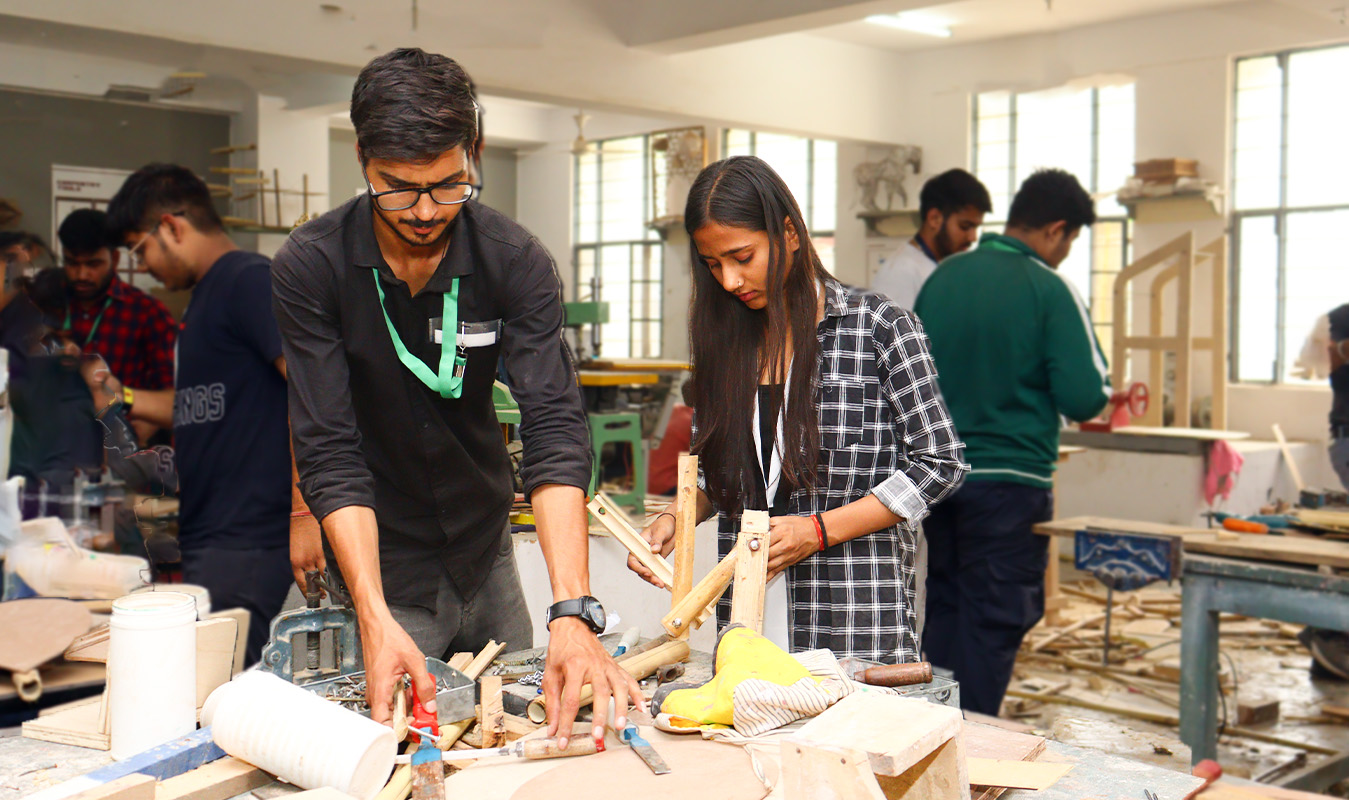
There is a strong culture of workshops in our department. Our classes often feel like working sessions rather than passive lectures. Faculty members do not simply “cover” content; they push us to think visually, critically, and practically. More than theory, what matters is what we design every day. That expectation is demanding, but it also makes us sharper. It slowly changes the way we observe the world.
My Portfolio Started Before I Felt Ready
One thing that surprised me in the best possible way was that portfolio-building starts from day one. At first, it felt intimidating. Most students enter design school thinking they have time to “become good later.” But here, the message is clear from the beginning: every assignment, every exercise, every experiment can become part of who you are as a designer.
That changes your mindset. You stop doing projects only for marks. You start asking different questions. Is this worth showing later? Does this reflect my design thinking? Can I push this further? Slowly, the portfolio stops being a file and starts becoming a mirror of your growth.
Our reviews and juries keep raising the benchmark. Work is looked at seriously, compared thoughtfully, and refined repeatedly. It can be challenging, but it prepares us for the standards of top design schools and professional practice.
A Design School That Refuses to Stay Inside One Discipline
What makes life at VGU especially exciting is the strong focus on interdisciplinarity. We are constantly encouraged to step outside our own specialization and connect with other fields. Every semester, transdisciplinary projects push us to collaborate, explore, and think beyond the narrow boundaries of one design stream.
That means a design student here is not limited to a studio bubble. We engage with ideas from management, journalism, architecture, media and entertainment, and even foreign languages. Through AEC, VAC, and SEC choices, we get the freedom to build a larger academic identity. That flexibility matters because the real world does not work in isolated subjects, and good design certainly does not.
I personally feel this is one of the most powerful parts of student life here. It teaches us that design is not only about aesthetics. It is about communication, systems, human behavior, business understanding, storytelling, and culture.
The Joy of Specialization with Exposure
Another thing I value deeply is that the Centre for Design Excellence offers multiple specializations, but the culture is not narrow. Even if someone belongs to one branch, there is constant exposure to the language and process of others. UI/UX, fashion, product thinking, digital design, visual storytelling, spatial work, and emerging practices all exist in conversation with each other.
UI/UX has become one of the most exciting branches to observe because it connects creativity with technology, business, and user behavior. Many students are inspired by the way senior students and alumni have moved into strong roles in major companies. At the same time, students in other areas are equally inspired by peers building fashion labels, working with artisans, exploring digital architecture, or experimenting with robotics-led design.
That variety creates ambition. It makes you think: maybe I can build a brand, maybe I can join a multinational, maybe I can become a founder, maybe I can create something nobody has seen before.
Masterclasses That Open the Mind
Some of the most memorable moments in my journey have come from masterclasses. There is something powerful about listening to top designers, practitioners, and specialists who speak not only about success, but about process, mistakes, discipline, and how to stay relevant in a changing world.
These sessions often leave a deep impact because they connect classroom work to real industry expectations. Sometimes they challenge our assumptions. Sometimes they introduce new tools, new design frameworks, or new ways of presenting work. And sometimes they simply remind us that the design world is much bigger than what we currently know.
The tool certifications through the Encode platform of CodeEdu add another layer to this. They make learning practical and future-focused. It is one thing to be creative; it is another to be professionally equipped. That combination is taken seriously here.
Studios, Labs, and Late Nights
One of the most honest ways to describe student life at CODE is this: the campus stays alive because the students stay engaged. The labs and workspaces are not symbolic facilities that look good only in brochures. They are used. Intensely.
The 3D printing setup, makerspace environment, digital workstations, advanced labs, and workshop infrastructure create a real culture of experimentation. Students are constantly building, testing, fabricating, editing, and refining. It is common to see people immersed in work late into the evening, and sometimes much later than that.
There is a special feeling in those hours. When the campus becomes quieter but the studio still glows, everyone around seems united by the same obsession—to get the line better, the surface cleaner, the interface smoother, the concept stronger. Those late nights have taught me as much about design as any scheduled class.
The Culture of Review and Jury
Design education becomes real when work is seen, questioned, and defended. That happens constantly here. Juries are a serious part of our life, and they shape us.
Presenting work in front of faculty members, experts, and reviewers can be stressful, especially when you know the expectations are high. But over time, the process becomes transformative. You learn to explain your decisions, accept critique, refine your thinking, and build confidence.
The jury culture at VGU reminds me that design is not just about making things look attractive. It is about intention. Why this form? Why this color? Why this user flow? Why this material? Why this message? Those questions stay with you long after the presentation ends.
Events That Make the Department Feel Alive
Some institutes teach design. Ours showcases it. That difference matters.
Throughout the year, the department comes alive through events that give student creativity a public stage. Encode is not just an event; it feels like a celebration of creative identity. The DEBW conference creates a different kind of energy—more dialogue, more exposure, more thought exchange. And then there are student showcases like the Turpan Show, where work is not merely submitted, but experienced.
These moments are exciting because they let us see our own department differently. We stop feeling like only students and start feeling like contributors to a living design culture. We learn how design is curated, displayed, performed, and received.
Learning Beyond the Campus Gate
What also makes this journey meaningful is that the exposure is not limited to classrooms and campus events. There is a larger professional ecosystem connected to us.
Students get opportunities for internships every year, which is extremely important. Mandatory internships make sure that learning stays grounded in reality. When students work with brands, design firms, startups, fashion teams, or digital platforms, they return with a very different level of maturity.
Some of our students have worked with designers at Lakmé Fashion Week. Some have connected with the Fashion Design Council ecosystem. Others have pursued UI/UX roles and built pathways into major companies. This makes campus conversations aspirational in a very practical way. We do not just talk about the industry—we see seniors and alumni entering it.
Alumni Who Make Us Believe Bigger Dreams Are Possible
There is something deeply motivating about hearing the stories of alumni who have gone ahead and built meaningful careers. Some have created their own brands. Some are leading as entrepreneurs. Some are working as designers in major companies. Some are shaping digital experiences in top multinational environments.
When names like Kavedia, Be Bossy, or founders like Ashu Gupta of D20 are spoken about, they do not feel like distant success stories. They feel like reminders that students from this same campus, these same studios, and these same jury rooms have gone on to create real impact.
That matters to current students. It creates belief. It tells us that placement is possible, entrepreneurship is possible, launching a label is possible, and building a serious design career from Jaipur is absolutely possible.
Startups, Brands, and the Confidence to Build
One of the strongest parts of design life at VGU is that the conversation does not end at placements. There is also a strong focus on startups and brand creation. That is important because many design students do not only dream of getting jobs—they dream of building something of their own.
Support through ACIC gives this ambition a real platform. The possibility of funding, incubation, mentorship, competitions, and design-oriented entrepreneurial exposure changes how students imagine their future. A student here can think not only like a designer, but also like a founder.
The annual designathon culture strengthens that spirit even more. It pushes us to solve problems, pitch ideas, collaborate across disciplines, and think in terms of innovation, not just aesthetics.
Working with Real India, Not Just Ideal Concepts
One of the most meaningful aspects of our design culture is the connection with craftspeople, clusters, and community-facing design. Working with artisans, especially through cluster-based initiatives and schemes such as SFURTI, changes the way one thinks about design responsibility.
In those moments, design stops being only about presentation boards and software skills. It becomes about livelihoods, heritage, systems, local knowledge, material understanding, and social value. For students, this is a powerful shift. It helps us understand that design can be modern and rooted at the same time.
That balance is rare and important. It allows us to imagine careers that are globally aware but still deeply connected to India.
A Campus Full of Different People and Shared Energy
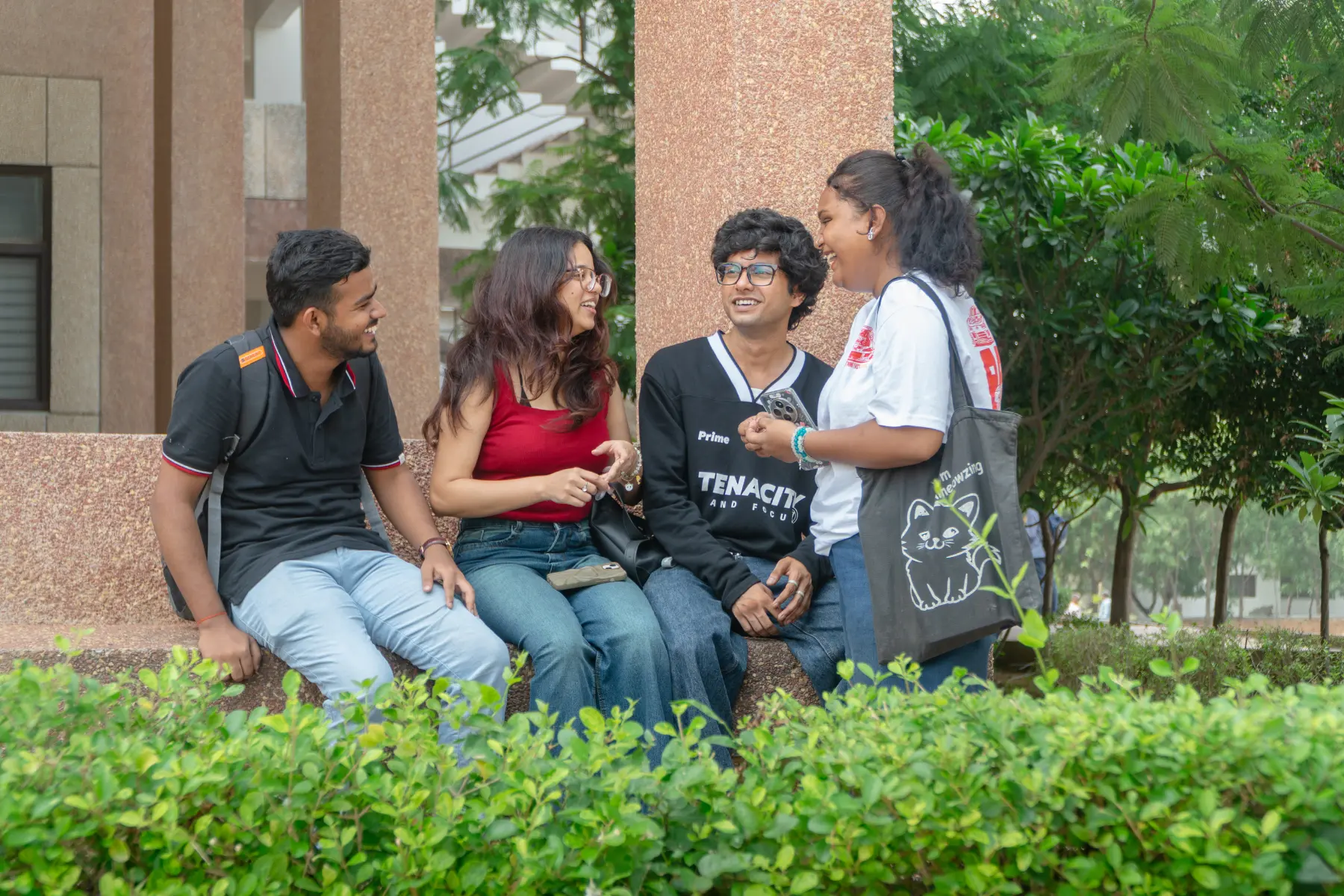
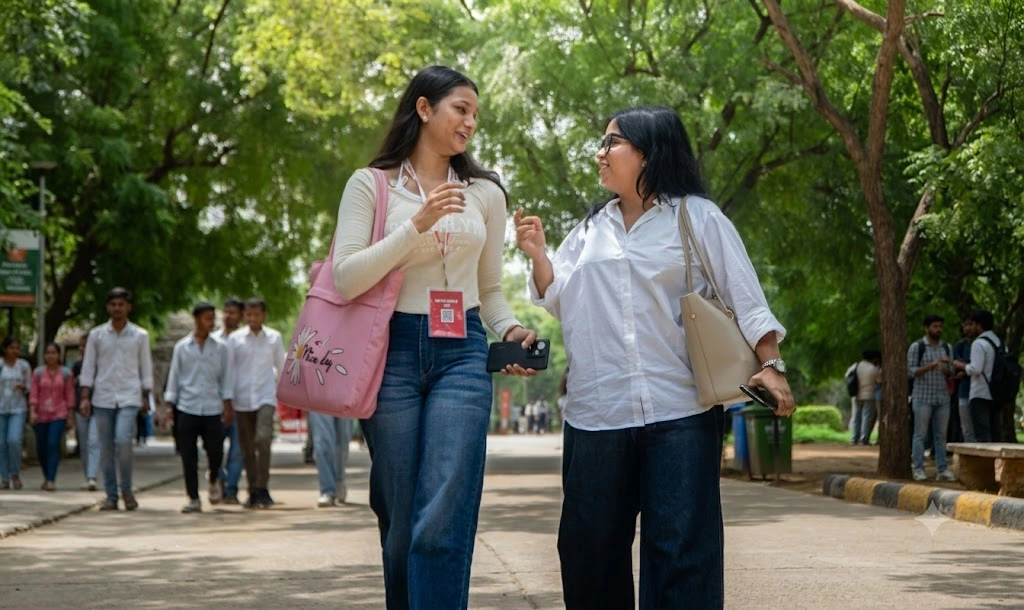
What makes my day-to-day life richer is the diversity of people around me. Students from many states of the country study here, and that makes the atmosphere more dynamic. Different languages, aesthetics, tastes, references, and working styles meet in one shared environment.
Then there are the clubs—spaces like Arts Brooks and Design Adda—which add another layer to campus life. These are not just extracurricular labels. They become creative communities. They give students places to discuss ideas, organize showcases, collaborate informally, and simply feel seen among people who understand creative obsession.
The exhibition spaces, high-end studios, and visually vibrant environment all contribute to that feeling. It is easier to think boldly when the space around you encourages boldness.
More Than Design, a Full Campus Life
Although design is at the center of my life here, campus life is not one-dimensional. There is strong encouragement toward sports, competitions, and broader participation. AIU opportunities and university-level engagement keep the student experience balanced.
This matters more than people realize. Creative work can be intense and emotionally demanding. Having the chance to step into events, competitions, clubs, or sports gives student life rhythm and relief. It reminds us that growth does not come only from the studio desk.
Why This Place Feels Different to Me
If I had to explain what makes VGU’s design culture different, I would say this: it treats students like emerging designers, not just enrolled learners. There is a visible focus on the student journey—portfolio, practice, exposure, internships, placements, startups, reviews, specialization, interdisciplinary learning, and personal growth.
It feels like a new-generation design school. There is seriousness, but also freedom. There is structure, but also experimentation. There is ambition, but also support. And because the university itself carries strong recognition—including NAAC A+ accreditation and broad visibility—it adds to the sense that we are part of something credible, growing, and future-facing.
For me, life at CODE is not about “studying design” in the usual sense. It is about living inside a process that changes how I see everything—objects, spaces, systems, interfaces, people, fashion, communication, and even everyday problems.
What My Life Here Has Taught Me
This campus has taught me that design is not only a subject. It is a habit of noticing. It is a discipline of making. It is the courage to show unfinished work. It is the humility to accept critique. It is the patience to build a portfolio slowly. It is the confidence to imagine a brand, a startup, a research paper, a patent, a prototype, or a new career path.
At VGU Jaipur, I do not feel like I am waiting for the real world to begin after graduation. In many ways, it has already begun. Every module, every workshop, every internship, every jury, every masterclass, every late-night studio session, and every public showcase feels like a rehearsal for the future I want to build.
And maybe that is the best part of my life on campus: every day, in some small or significant way, I am becoming a designer.