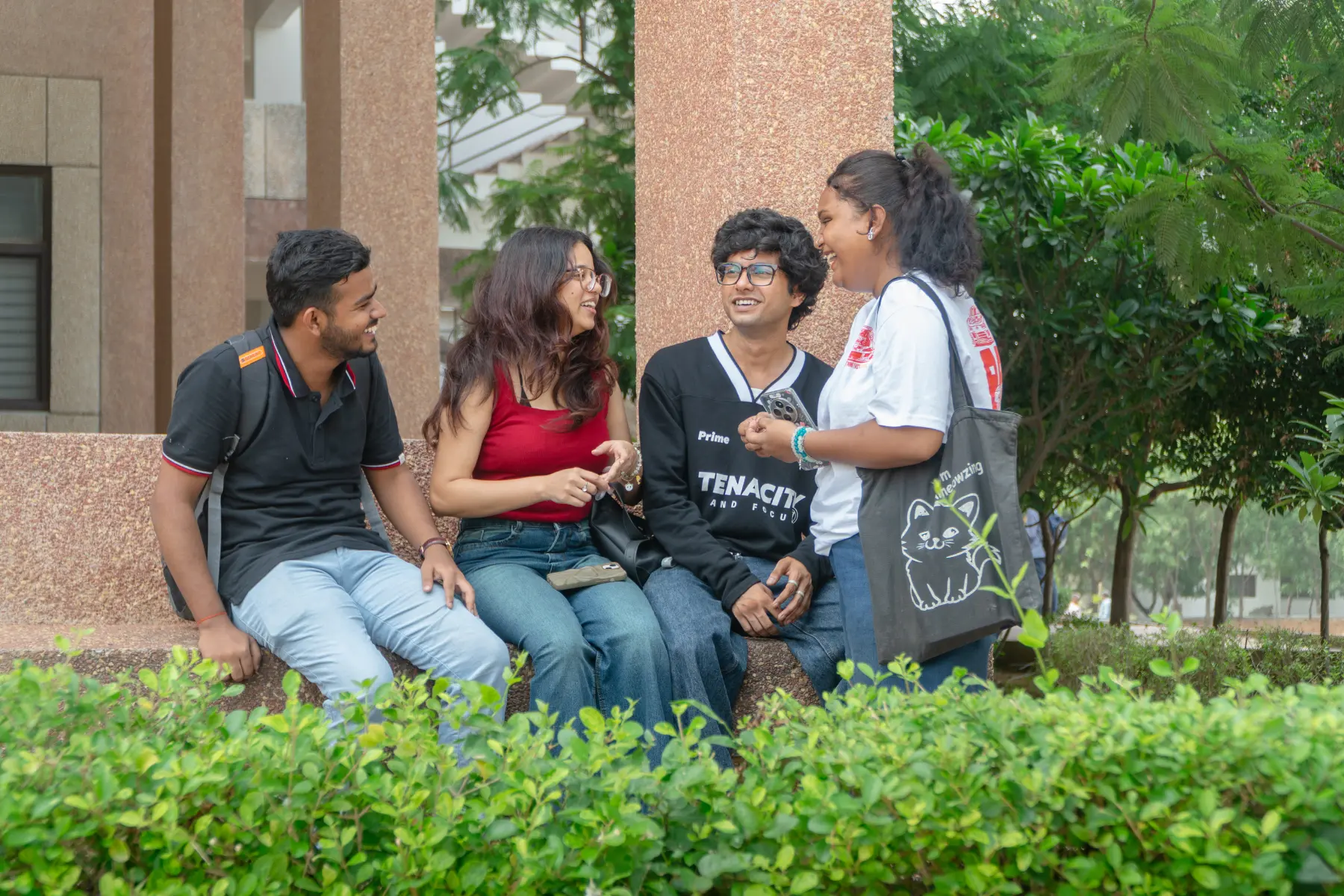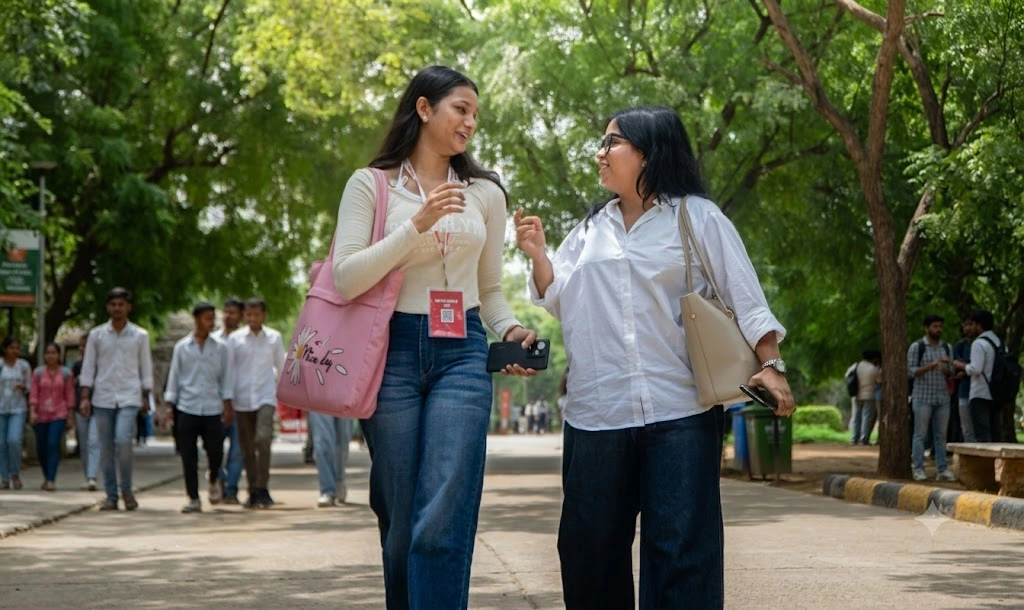
When people ask me what campus life at Vivekananda Global University feels like as an architecture student, I usually say it is intense, exciting, creative, and deeply transformative all at once. For me, VGU has never felt like only a university campus; it has felt like a studio ecosystem where every semester pushes me to think better, work harder, and slowly become more professional in the way I design, speak, collaborate, and imagine the future. VGU also presents itself as a NAAC A+ accredited university and highlights QS Asia 2026 recognition, including a #95 position among Indian private universities, which adds a real sense of pride to being part of the institution.
The studio is my second home
As an architecture student, I spend so much of my time in the studios that they genuinely begin to feel like a second home. This is where my ideas first start as rough pencil strokes, then slowly become plans, sections, models, concepts, and eventually something I can stand up and defend in front of a jury. Some of my longest days on campus have been spent in studio, but those have also been the days when I have learnt the most.
What I value most is that the review culture pushes me to go beyond surface-level design. Pin-ups, discussions, model making, drafting, software work, and iterative feedback have taught me that architecture is not about one good idea, but about refining that idea until it can respond to real people, real contexts, and real problems. When external jury members come in, the atmosphere changes completely; the questions become sharper, the conversation becomes more professional, and I start seeing my work through the lens of practice rather than only academics.
Stambh is not just an event
For me, Stambh is one of those experiences that defines architecture school. It is not just another event on the calendar; it feels like a moment when the entire energy of the department becomes visible. Work that usually stays inside sheets, models, and studio corners is suddenly out in the open, discussed, reviewed, celebrated, and challenged.
What I enjoy most about Stambh is that it creates a healthy pressure. It makes me want to present better, think deeper, and learn from the work of my seniors and classmates. It also reminds me that architecture education is not only about completing submissions; it is about building confidence, receiving criticism with maturity, and learning how to communicate ideas in a way that others can understand and appreciate.
Architecture stays at the centre
One thing I have genuinely appreciated at VGU is that even though the environment is multidisciplinary, architecture still remains the key focus for me as a student. The university's broader public positioning speaks strongly about flexibility, industry integration, research, innovation, and learning beyond the classroom, and I can feel that spirit in the way our academic environment encourages us to look beyond one narrow discipline.
At the same time, architecture does not get diluted in that process. Instead, I experience multidisciplinary learning as something that strengthens architecture. Transdisciplinary projects, AEC and VAC exposure, interaction with other domains, and collaborative assignments make me understand that architecture is connected to technology, sustainability, urban systems, communication, craft, and social realities. But through all of this, design thinking remains at the heart of what I do.
Learning through real projects
One of the most meaningful parts of my journey has been working on live and consultancy-oriented projects with faculty members. Those experiences make learning very different from regular classroom assignments because suddenly the project is no longer imaginary. It has a site, a client, a purpose, a timeline, and expectations that feel real.
Whether it is thinking around redevelopment ideas connected to Jaipur Railway Station, contributing to residential building design exercises, or being involved in project-based discussions with faculty, I have felt the difference that practical exposure makes. It teaches me accountability. It teaches me teamwork. Most importantly, it teaches me that architecture is not only about designing something beautiful on paper; it is about responding to users, constraints, systems, and execution realities.
Building together changes everything
Some of the most memorable learning does not happen only on sheets; it happens while making. Experiences like working around building-centre ideas, understanding skills-oriented construction environments such as FIGSI-related centres at Hosur and Jaipur, and participating in hands-on exercises have helped me see the material side of architecture more clearly. Even when the learning begins in an academic setting, it quickly becomes about coordination, detailing, and the discipline of turning ideas into built outcomes.
I have especially enjoyed moments when teamwork becomes physical and visible. Working on bamboo structures with the CHATT team is the kind of experience that stays with me because it combines design, craft, experimentation, and collaboration in one place. When I work with my peers in such settings, I do not only learn structure and joinery; I also learn trust, coordination, and the joy of building something together with my own hands.
Juries make me sharper
The external jury system has had a major impact on the way I think. Inside the studio, I may become attached to my concept, but the moment I stand before jury members, I realize that design must be explained, defended, and tested. That process can feel demanding, but it has probably shaped me more than any easy appreciation ever could.
I have learnt how to accept critique without losing confidence. I have learnt how to refine drawings, clarify concepts, improve presentations, and make my arguments more precise. Over time, juries stop feeling like obstacles and start feeling like stepping stones into the professional world.
Competitions push me beyond marks
Competitions have changed the way I approach architecture. Whether it is Solarathon, design competitions, thesis competitions, live project challenges, or internal showcases, they push me to think beyond grades and semester outcomes. VGU also publicly highlights a broader culture of innovation, hackathons, patents, startup activity, and student development, and that larger atmosphere naturally encourages us to participate and test ourselves outside routine submissions.
When I take part in competitions, I start thinking more boldly. I experiment more, research more, and take my own ideas more seriously. Competitions also train me to work in teams, manage time, and present under pressure, which are all skills that matter as much in practice as they do in college.
Student chapters make me feel professional
Professional student chapters like IIA and iShare add a very important layer to campus life for me. They make architecture feel connected to the real professional world. Through them, I become more aware of the language of the discipline, current conversations in the field, and the importance of networking, professional ethics, and institutional participation.
At the same time, clubs and student communities give balance to our intense academic routine. Spaces like Suruchi Kendra reflect how campus life also involves sensitivity, social contribution, and learning beyond self-interest. VGU's institutional publication describes Suruchi Kendra as a student initiative focused on teaching underprivileged children, which makes me feel that student life here is not only career-oriented but also socially rooted.
Workshops, webinars and masterclasses
A major reason my learning has felt different is that it does not stop with the regular timetable. Online webinars, masterclasses, workshops, and expert sessions keep opening new directions for me. Sometimes these sessions introduce me to emerging practices; at other times, they help me understand materials, sustainability, digital tools, or the changing expectations of the profession.
I have particularly valued learning through workshops related to digital architecture and ATC-oriented exposure because they make me think differently about representation, technology, and future-facing design methods. These experiences complement the academic rigour on campus. VGU's public messaging strongly emphasizes practical learning, industry alignment, and career-readiness, and I can connect that message with the way such academic extensions are woven into student development.
Rigour is real here
If I had to describe one thing honestly, it is this: the academic rigour is real. Architecture here is not casual. Deadlines, reviews, drafting, readings, studio corrections, research, model work, software tasks, and presentations keep us constantly engaged. It can be exhausting, but it is also the reason I can see my own growth so clearly semester after semester.
What makes the rigor meaningful is that it is not empty pressure. It is supported by a culture of learning through doing. VGU repeatedly positions itself around academic quality, practical learning, and industry-linked outcomes, and that larger institutional mindset reflects strongly in how students are expected to perform and progress.
Research and academic exposure
Another aspect that has widened my perspective is research. Being encouraged to publish papers, present work, and participate in conferences such as DEBW gives academic life another dimension. It makes me realize that architecture is not only a design profession but also a field of inquiry, writing, documentation, and critical thought.
When I work on papers or conference submissions, I begin to see design in a more analytical way. I learn to frame questions, support arguments, document processes, and connect practice with theory. This has helped me understand that architecture education is stronger when it includes both studio intensity and intellectual depth.
Travel teaches differently
Some of my most eye-opening experiences have happened outside the classroom. Going on academic trips, especially to places like Kochi, changes the way I understand architecture because suddenly I am reading a city through its streets, buildings, materials, climate, history, and everyday life. No lecture can fully replace that feeling of seeing architecture in its lived context.
Travel makes me more observant. It teaches me that architecture is shaped by culture, geography, memory, and community. When I return to the studio after such visits, I do not design in quite the same way as before.
Joint studios broaden my thinking
Working in joint studios with students from other colleges has also been a very valuable experience for me. The moment different groups of students come together, I begin to notice how design approaches can vary so much—some people are more conceptual, some are more technical, some are better at visualization, and some are stronger in research or presentation.
That kind of exchange improves me as a student. It makes me compare, adapt, and expand my own process. Instead of seeing architecture education as confined to one campus, I begin to understand it as a larger dialogue in which I am constantly learning from others.
Module-based and future-ready learning
As a student, I increasingly value module-based teaching because it gives a stronger sense of direction and progression. It feels closer to the way top architecture colleges structure learning—through focused, layered, and outcome-driven modules rather than only broad theory. VGU also frames its academic model around learning beyond classrooms, early career readiness, and structured development, which supports this kind of approach.
This matters because architecture today demands both breadth and precision. Platforms such as Code Edu, digital learning support, and structured academic tools become useful when they help us learn in smaller, sharper, more accountable ways. For me, this kind of learning does not reduce creativity; it actually strengthens it by giving it discipline.
Every semester gives practical exposure
One reason I often describe VGU architecture as different is that practical exposure keeps returning in multiple forms every semester. Live projects, consultancy interactions, competitions, workshops, juries, chapter activities, and field-based learning create an environment where education feels continuously connected to practice. That kind of repetition builds confidence gradually but strongly.
Because of this, I never feel that I am studying architecture only for exams. I feel I am slowly building a portfolio, a way of thinking, and a professional attitude. The difference is subtle at first, but over time it becomes very visible.
Campus life has colour too
Even with all the academic pressure, campus life here is not one-dimensional. Events like Panache, Pratistha, Pragati, and Designathon add colour, energy, and interaction to student life. They create moments where I can step out of the intensity of studio and become part of the wider campus culture.
That balance matters a lot to me. Architecture students need celebration as much as critique, expression as much as rigor, and community as much as individual effort. These events make campus life feel alive and shared rather than isolated.
Alumni and placements make the future feel real
As students, we are always watching what our seniors go on to do. When alumni clear GATE, move to top SPAs, or go on to study at foreign universities, it gives me confidence that the journey can lead somewhere meaningful. Those stories turn ambition into something visible.
Placements matter in that same way. VGU's placement overview states that the university reports a 90% overall placement rate, 1,500+ students placed annually, 400+ active recruiters, and 15,000+ cumulative graduates placed, alongside strong internship activity and recruiter engagement. Even though architecture follows its own pathway compared with some other disciplines, this placement culture still creates a finishing-school mindset: we are expected to graduate with skills, confidence, exposure, and professional readiness rather than just a degree.
Why I call it a different concept altogether
If I had to sum up my experience in one line, I would say that studying architecture at VGU feels like being part of a very different concept altogether. It is not just multidisciplinary for the sake of saying so. It is multidisciplinary in a way that keeps feeding back into architecture—through studios, workshops, juries, travel, research, collaborations, competitions, construction exposure, and practical projects.
That is what makes campus life meaningful for me. I am not only learning how to design buildings; I am learning how to think, observe, collaborate, write, build, present, and grow. And somewhere between the studio tables, late-night submissions, juries, site exposure, events, and shared effort with friends, architecture stops being just a course and starts becoming a way of life.